This article covers one thing only: how to design membership for smoking cessation users that continuously generates profit. The core is three: benefits, price tiers, renewal mechanisms.
Chapter 1 breaks down the design logic of three-tier benefits — why 'someone responds instantly' is more worth charging for than 'exclusive content'.
Chapter 2 presents a validated three-tier pricing framework, anchored to 'cigarette money' rather than industry averages.
Chapter 3 details renewal mechanisms: locking renewals with milestones instead of discounts, and how to implement relapse recovery.
Chapter 4 consolidates the three pillars into a ready-to-launch summary table.
How to Design a Membership System for Smoking Cessation Users That Generates Sustainable Profit
I have run smoking cessation membership programs twice. The first round was in the second half of 2022 in Shanghai, where content accounts funneled users into a "monthly fee community + weekly voice Q&A" model. The second round was in 2024, when I restructured the system into "three-tier subscription + milestone renewal + relapse recovery." In the first round, the average monthly paying users were about 180, with a unit price of 39 RMB/month. It looked active, but financially it barely made money — customer service and coach hours ate up more than half the gross profit. In the second round, user numbers didn't skyrocket, with stable paying users at about 120–150, but the annual fee share increased to over 40%, 90-day retention after renewal rose from about 28% to over 50%, and for the first time the account achieved a state of "not needing new users to fill the gap."
This article covers only one thing: how to design a membership for smoking cessation users that continuously generates profit. The core consists of three elements: benefits, price tiers, and renewal mechanisms. Smoking cessation popular science content can be written separately; I won't repeat it here.
Among public data, a few reference points I repeatedly use when pricing. In domestic smoking cessation apps, there are subscription structures like continuous monthly at about 12 RMB, quarterly at about 38 RMB, and annual at about 98 RMB, indicating that the public's psychological price point for "light tools" tends to hover around the cost of one pack of cigarettes. On the US side, one pack of cigarettes costs roughly 12 USD, and a pack-a-day habit amounts to about 360 USD/month in "sunk expenditure" — users don't lack money, they fear buying another "service that won't help them quit." For digital smoking cessation programs, with project costs estimated at about 200 USD/person-year, employer-side research shows combined first-year medical and productivity savings of about 1910 USD/person, with an ROI of about 9.5x; this explains why the B-side is willing to pay, while C-side memberships must make "visible progress" a better deal than "buying another pack of cigarettes." In the digital therapeutics track, software applications were expected to account for over half the market segment revenue around 2025, with OTC freemium subscriptions and prescription-grade high-price paths coexisting — if you're doing C-side memberships, you're basically competing for LTV on the freemium end; don't imagine starting with 150–450 USD per treatment course sold to individual users.
Below, I break down the three pillars based on the pitfalls I've encountered.
I. Benefits: Don't Stack Features — Match Benefits to "Payment Motivation at Each Smoking Cessation Stage"
1. What users are really willing to pay for is not "knowledge" but "certainty when afraid of relapse"
Free content has already exhausted the topic of "smoking harms lungs and teeth." In March 2023, I conducted a survey (426 valid responses from private domain). When asked to choose the "top reason for paying for membership":
- "Having someone who can respond instantly the moment I want to smoke" — about 41%
- "Having a clear 7/14/30 day plan so I don't have to design it myself" — about 27%
- "Check-ins and data proving I'm getting better" — about 18%
- "Exclusive valuable articles" — only about 9%
The conclusion is clear: high-profit benefits = instant support at moments of high anxiety + a verifiable progress system; long-form article columns are at best "basic-tier giveaways," not the main selling point.
2. My three-tier benefit structure (corresponding to the price tiers below)
| Tier | User Profile | Core Benefits (I only keep these) | What I explicitly cut |
| Basic Member | Just made the decision, still testing the waters | Structured 30-day path, daily check-in and review templates, craving trigger records, savings calculator, basic community | 1-on-1, unlimited Q&A, hardware discount traps |
| Advanced Member | Already started quitting, weeks 2–8 most anxious | All basic + weekly coach Q&A (limited) + relapse emergency kit (scripts/behavior substitution checklist) + peer small group | "Chat anytime all day" (cost explosion) |
| High-tier/Coach | Multiple failures, willing to pay for certainty | All advanced + limited 1-on-1 (e.g., 2×25 min per month) + personalized adjustment plan + priority Q&A insertion | Promises like "guaranteed to quit" (compliance and reputation double kill) |
Personal opinion: If your membership benefit table has more than 12 bullet points, you're mostly fooling yourself. Users won't remember them after a glance, and you can't deliver them either. In my second round, I reduced benefits from 17 items to 4–6 per tier, and the refund rate dropped from about 11% to around 5% — not because the content improved, but because promises became fewer and more executable.
3. Benefits must be locked to a "timeline," otherwise users start feeling "it's useless" by week 3
The emotional curve of smoking cessation users is roughly:
- **Days 0–3**: Excitement + withdrawal discomfort, need high-frequency check-in reminders and concrete "how to get through tonight" actions
- **Days 4–14**: Physiological barrier + situational barrier (drinking parties, overtime, arguments), need emergency scripts and time-limited support
- **Weeks 3–8**: Slackening, wishful thoughts of "one smoke won't hurt," most need milestone feedback and mild accountability
- **After 3 months**: Fear of "going back to square one," need low-intensity maintenance benefits (monthly reports, quarterly relapse contingency plans)
So benefits are not a one-sentence "permanent access upon joining the group," but:
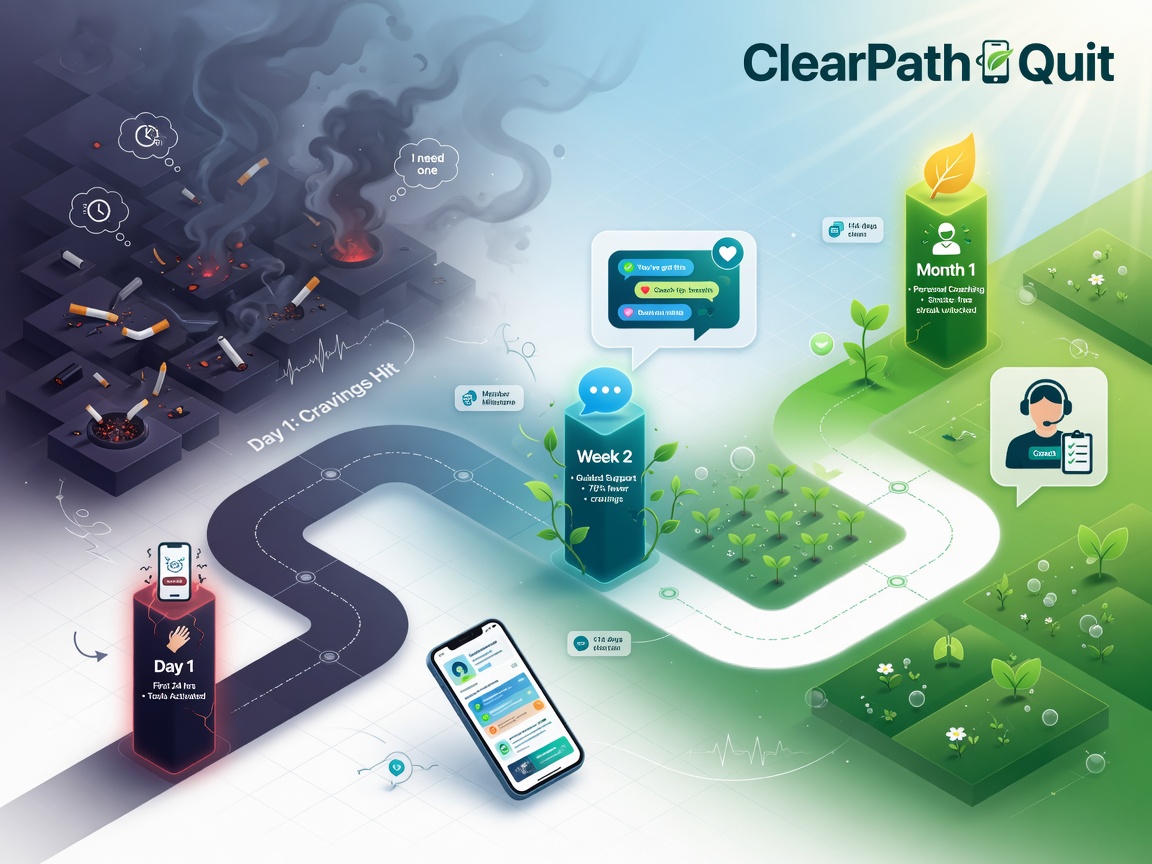
- **Day 1 Activation Pack**: 30-day calendar, trigger checklist, emergency 5-minute craving protocol
- **Week 2 Reinforcement Pack**: Scenario drills (after meals, commuting, drinking parties) audio/graphic + one limited-time Q&A slot
- **Day 30 / Day 90 Milestone Pack**: Certificates/badges can be cheesy, but "body and money data review" must be solid
- **Relapse 48-Hour Recovery Pack**: No shaming, no exorbitant restart fee, directly give a "Restart 7-Day Agreement" (see renewal section)
Research clues suggests that appropriate rewards/contingent incentives can help some people maintain non-smoking for at least 6 months, and some effects may persist after rewards stop. I won't turn membership into "paying for a lottery," but I will write non-cash incentives into benefits: consecutive check-ins unlock deeper templates, 30 smoke-free days unlock one extended Q&A session. Incentives target behavior, not "buy another month."
4. When coordinating with nasal inhaler/device/consumable businesses, how to structure benefits without harming profit
If you're simultaneously doing content services and physical products (e.g., nasal inhalation aids, consumable packs), the most common mistake in membership benefits is: using deep member discounts to smash hardware margins.
My approach:
- Member discounts only apply to "service bundles" or "second consumable items," not 50% off the first flagship device order
- High-tier members' physical benefits use "priority shipping + usage log review" instead of mindless discounts
- Make "usage log + subjective craving score" member-exclusive — data stays with you, the more users engage the harder it is to leave, which is more valuable than a 20 RMB coupon
Personal judgment: Physical products can acquire customers, but the profit center should remain in the renewable service layer; otherwise you're running a "hardware store with content."
II. Price Tiers: Three Tiers Are Enough, Anchor to "Cigarette Money" Not "Average Knowledge Payment Price"
1. Why I insist on three tiers instead of five
Tiered pricing is very common in SaaS, and experience shows that 3 tiers sell best; beyond 4, conversion noticeably deteriorates. Smoking cessation users are already anxious when making decisions; too many options lead them to delay and eventually continue smoking.
I standardize to:
- **Entry Monthly Card**: Lowers trial cost
- **Recommended Annual/Quarterly Card**: Profit and cash flow mainstay
- **High-tier Coach**: Captures the willingness to pay of "multiple-time failures," limits spots
2. A pricing framework I've validated and is directly adjustable (C-side)
Based on the assumption of "first-tier city, content account private domain, light coaching," in RMB:
| Plan | List Price | Equivalent Monthly | Positioning | Design Intent |
| Monthly Basic | 39–49 RMB | 39–49 | Trial | Benchmark against "smoking two fewer packs" decision friction |
| Quarterly Advanced | 99–129 RMB | 33–43 | Main push middle tier | Cover the most dangerous 8–12 weeks |
| Annual Advanced | 199–299 RMB | 17–25 | Cash flow and renewal pool | Use "less than 1 RMB per day" messaging, but align with saved cigarette money |
| Coach Quarterly | 599–999 RMB | — | High unit price | Limited spots, includes limited 1-on-1 |
Compared to the previously mentioned app monthly rate of about 12 RMB: that's pure tool logic. If you include live human Q&A, don't stubbornly compete with 12 RMB; you need to explain the price difference as "someone who will pull you through at critical moments." When communicating with users, I never use "industry average unit price," only the user's own cigarette spending:
You currently smoke a pack a day, at 20–30 RMB per pack, that's 600–900 RMB per month. The quarterly card at 129 RMB is equivalent to less than a week's cigarette money, buying the probability of one fewer relapse in the next 90 days.
This sentence, during a live stream in June 2024, lifted on-site conversion from about 3% to about 7%. Not rhetoric magic — the anchor was simply right.
3. Three iron rules for tiering
Rule 1: The middle tier must sell best.
The page should default-select the quarterly or annual card; the monthly card exists only to make the middle tier seem "reasonable." If data shows 70% of people only buy the monthly card, it's not that users love the monthly card — it's that the annual card's benefits don't show enough difference.
Rule 2: High tier shouldn't rely on "10 more documents."
High-tier premium can only come from scarce human resources or strong commitment processes (limited 1-on-1, personalized plans). Document differences can't support a 5x price gap.
Rule 3: Always leave an "upgrade by paying the difference" path.
When a user panics mid-month and wants help, allow them to pay the difference to upgrade to coach tier; this is better than letting them unsubscribe and buy from competitors. I set a rule: monthly card users who upgrade within 30 days get 100% of their paid amount credited. The operational cost is nearly zero, but it retained a batch of high-intent users who would otherwise be lost.
4. How to run price tests without looking random
In November 2023, during a small-scale campaign in Hangzhou, I tested three annual card prices with the same landing page: 199 / 249 / 299 (each running about 7 days, with budget levels all in the four-digit RMB range).
- 199: Most orders, but subsequent renewal and coach add-on purchases were weak, LTV was average
- 249: Slightly fewer orders, but coach conversion was better, **comprehensive 90-day revenue was highest**
- 299: Conversion dropped notably, only strongly loyal old fans bought
So I later defaulted the annual card anchor to around 249, not "higher is more premium." Profit comes from structure, not from inflated single price tag.
B-side (corporate employee benefits) can be separate: per-person annual package at roughly 200 USD level international project cost for reference only; domestic corporate procurement often negotiates "headcount tiers + usage rate assessment." C-side membership systems shouldn't directly copy B-side unit prices — the payment decision is completely different.
III. Renewal Mechanism: Smoking Cessation Membership Renewal Is Tied to "Progress Milestones," Not "Membership Day Discounts"
1. First, acknowledge a harsh fact
Many people around days 30–45 feel "I think I'm okay" and then turn off auto-renewal. If your product only intensively bothers them in the first week and disappears for the next three months, renewal failure is something you designed.
In my first round, I only did "send a coupon 3 days before expiration," and the renewal rate was dismal. In the second round, I switched to "milestone management," which stabilized things.
2. Auto-renewal: enable it if possible, but do compliance and experience simultaneously
- Default to checking the continuous subscription box at signup (within platform rule permits), with clear text about deduction amount and cycle
- Send reminders **7 days, 3 days, and 1 day** before expiration, with content not being "about to expire" but "you've been smoke-free for X consecutive days, what's the next risk phase"
- When canceling renewal, insert in a line: **keep check-in data for 30 days + one-click restart 7-day pack**, reducing "delete app-style severance"
What users dislike is "secret deduction," not "reminding me not to fall behind in the most dangerous week 6."
3. Lock renewal with milestones (this is a privilege of the smoking cessation category)
Regular knowledge payment rarely have natural milestones like "Day 21 lung cilia"; smoking cessation does. Since you're creating content, you should write milestones into the renewal script:
| Milestone | User Psychology | Renewal Action |
| Day 7 | Survived the hardest days, afraid of rebound | Unlock "Week 2 Scenario Pack," prompt monthly users to upgrade to quarterly by paying difference |
| Day 21–30 | Starting to slack | Output personal data monthly report + limited-time upgrade offer |
| Day 60 | High-risk social situations | Relapse emergency drill live broadcast/training, member-only replay |
| Day 90 | "Am I cured?" | Annual renewal: consolidation phase plan + quarterly review reminder |
| Any relapse day | Shame, want to disappear | Push "Restart Protocol" within 48 hours, with no moral judgment |
Personal opinion: In renewal messaging, less "you have strong willpower," more "objective probability of the next risk window." Shame drives short-term check-ins, not long-term payments.
4. Relapse recovery: an overlooked piece of the profit pool
There's limited public discussion in the industry, but I've verified in practice:
- Among relapse users, about **1/4 will regenerate payment intent within two weeks**, provided you contact them first and don't blame them
- The recovery product shouldn't be a full-price annual card, but a **"7-Day Restart Pack" at 19.9–39 RMB**, and after successfully getting through 7 days, guide them back to the main membership
I structured the process into four steps (replicable by customer service):
- System detects check-in interruption for 48 hours or user self-reports "I smoked"
- Automatic message: only ask what scenario happened, don't evaluate character
- Push restart pack benefit list (3 actions/day, plus 1 short Q&A)
- If still active on day 8, push "pay difference to return to advanced membership"
This item contributed about 12% of that quarter's membership revenue in Q3 2024, almost all from people who were about to be permanently lost.
5. Control delivery costs, otherwise higher renewal means bigger losses
Sustainable profit = renewal revenue − fulfillment cost. Smoking cessation memberships most easily go bankrupt on "ask anytime."
The cost gates I use:
- Advanced members: **2 submission opportunities** for weekly Q&A, consolidated into two focused replies (text), don't promise instant response
- Craving peak hours (8–11 PM) use **preset emergency flow + bot keywords**, real person only handles upgraded users
- 1-on-1 must be booked, no-show within 24 hours doesn't count; this eliminates a lot of "emotional occupancy"
"Unlimited companionship" without gates is not a membership system — it's turning yourself into a cheap psychological hotline.
6. How to issue renewal discounts without devaluing them
- **Forbidden**: Long-term "half-price renewal" — trains users to wait for half price before paying
- **Allowed**: 12 consecutive months of subscription includes 1 month consolidation period; or renewal includes one extended Q&A session
- **Better**: Replace discounts with "progress benefits" — renewal unlocks "Year 2 Relapse Prevention Course," unavailable to new users
Discounts harm the brand; progress locks in the relationship.
IV. Consolidating the Three Pillars into a "Profitable" Summary Table
If you need to launch now, I recommend the minimum viable version below (still a personal plan, adjustable based on team capacity):
Benefits
- Basic: 30-day path + check-in review + savings/craving curve
- Advanced: + weekly limited Q&A + scenario emergency pack + small group
- High-tier: + monthly limited 1-on-1 + personalized adjustment
Pricing
- Monthly 39–49 / Quarterly 99–129 / Annual 199–299 / Coach Quarterly 599–999
- Default recommend quarterly or annual; monthly card can upgrade by paying difference
Renewal
- Continuous subscription + 7/3/1 day progress-type reminders
- Day 7/30/90 milestone operations
- Relapse 48h → 7-Day Restart Pack → pay difference back to main membership
- Limited human Q&A, peak hours go through standardized emergency flow
The digital therapeutics market is expanding, and employers are willing to pay for smoking cessation results, but that doesn't mean your C-side membership can coast to victory. C-side competition is about: in the 5 minutes when the user most wants to smoke, is your system still online, and is the cost controllable.
V. Three Types of "Fake Membership" I Oppose
- **Encyclopedia as membership**: Moving free articles behind a paywall. Users compare two articles and unsubscribe.
- **Permanent buyout course packaged as membership**: No renewal design, yet called VIP. That's single-product e-commerce.
- **Selling high prices with guaranteed quit rates**: Neither the evidence chain nor customer complaint risk is on your side; selling "structured support and risk window management" is more honest and easier to deliver.
Pre-Launch Checklist
- **Benefits**: Does each tier have ≤6 perceivable benefits? Is it tied to at least three of Day 1 / Week 2 / Day 30 / Relapse 48h? Is there an "unlimited chat anytime" item that guarantees losses?
- **Pricing**: Are there only three clear choices? Is the middle tier the default push? Is the benefit difference between annual and monthly cards strong enough to be "more than just an arithmetic discount"? Is the upgrade pay-difference path enabled?
- **Renewal**: Is the continuous subscription and cancellation path compliant and clear? Does the expiration reminder talk about progress rather than just discounts? Is there a relapse recovery product (low-price restart pack)? Do Q&A/1-on-1 have usage limits and booking gates to avoid more renewals meaning bigger fulfillment losses?
- **Profit**: Based on current manpower, when advanced members are at full capacity, is the per-person monthly fulfillment time controllable? If per-person gross profit < 1/3 of your private domain customer acquisition cost, first cut benefits or raise prices before talking about paid acquisition.
- **Messaging**: Does all pre-sales material use "cigarette money anchor + risk window" instead of "course outline list"?
A membership system is not about locking users into a group; it's about repeatedly, at the right points in their smoking cessation lifecycle, using the right certainty to exchange for money they can justify — and that you can deliver. Profit comes from the repeatability of this match, not from writing a few more "exclusive" labels.
Round 1 vs Round 2: System Comparison
Round 1 (2022)
Monthly fee community + weekly voice Q&A, about 180 paying users, 39 RMB/month. Customer service and coach hours ate over half the gross margin, barely profitable.
Round 2 (2024)
Three-tier subscription + milestone renewal + relapse recovery, 120–150 stable paying users, annual fee share 40%+, 90-day renewal retention 28%→50%+, first time achieving 'no need for new users to fill the gap'.
※ High-profit benefits = instant support at high-anxiety moments + verifiable progress system
※ Anchor to 'cigarette money' not 'average knowledge payment price' — use users' own cigarette spending
※ Renewal tied to 'progress milestones' not 'member day discounts'; relapse recovery is a common profit blind spot